For Innovation, You Need Leaders Who Act
Organizations often talk about innovation as if it’s something you can staff, fund, or neatly organize before progress begins. Many believe creating a dedicated department or program is the first step.
Experience has shown me that innovation in construction rarely unfolds exactly as planned. A concept may look straightforward on paper, but as development begins, unforeseen challenges emerge. Cost, constructability, safety requirements, scheduling impacts, and operational realities all come into play.
At that point, leaders can shelve the idea indefinitely or continue refining it until it works. The most successful innovations usually come from that second path.
Bringing viewpoints together—from engineers, field teams, safety professionals, and operations leaders—helps identify risks early, solve problems faster, and ultimately turn a good idea into something that can succeed in the real world.
The roots of innovation
Start small to build momentum. Innovation starts with a mindset of looking for ways to improve, no matter how small the change may seem.
Most meaningful improvements come from simple changes that make the work safer, more efficient, or more organized. Sometimes, it’s as straightforward as creating better tool storage in a boom lift or improving the layout of a workspace to reduce unnecessary movement. Small adjustments add up over time.
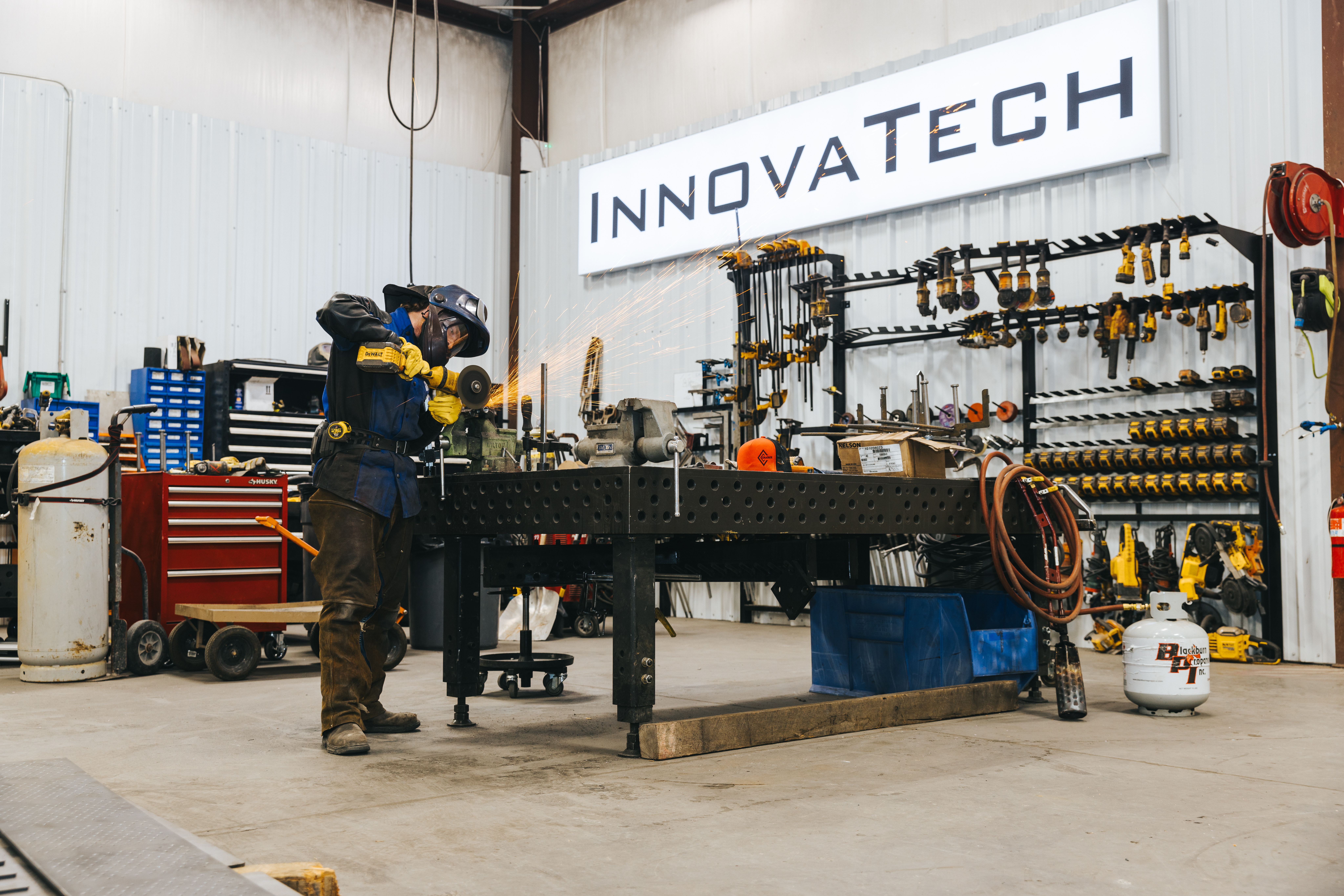
When employees know their input is being heard and considered, trust grows and better ideas surface. At InnovaTech, a BZI company, we stay closely connected to our teams in the field. We hold weekly calls with field leadership to understand challenges, constraints, and opportunities as they arise.
Innovation requires persistence
From my experience, initial innovation ideas in construction quickly encounter real constraints, whether in cost, constructability, safety, or scheduling. At that point, leaders face a choice: pause indefinitely or continue refining.
Successful organizations understand why the effort matters, which creates the persistence needed to work through challenges. Without it, obstacles become stopping points rather than learning opportunities. Persistence is about staying engaged long enough to make it work in practice.
The front lines offer the start
The people closest to the work often have the clearest and most creative view of potential improvements. Creating opportunities for those voices to be heard helped us make better decisions and continuously improve how we operate.
In construction, field teams—whether a construction worker at a jobsite to a salesperson speaking with customers daily—see inefficiencies, risks, and opportunities in real time.
A culture that values those insights requires visible action. When feedback consistently leads to decisions, trust grows, and ideas improve.
We built strong relationships with our field crews, creating open lines of communication and honest conversations. Every team member can access the employee app, where employees can submit requests, concerns, and ideas directly, often highlighting issues that leadership might not otherwise see.
Leaders don’t need to act on every idea, but they must close the loop. Clear decisions, whether moving forward or not, reinforce accountability and keep progress moving.
Balance action with discipline
When we look at a new process, tool, or approach, we bring the right stakeholders together and work through the pros and cons, typically around a whiteboard.
We assess whether the idea improves safety, reduces man-hours, increases productivity, or helps us complete work more efficiently. The goal isn’t innovation for its own sake. The goal is to find practical improvements that deliver measurable value for our teams and clients.
In construction, safety and speed are often viewed as competing priorities. In practice, we find the opposite to be true. When work is planned correctly and safety is built into the process from the beginning, crews can work more efficiently and with greater confidence.
Safe systems tend to be more predictable. They reduce rework, minimize disruptions, and help teams stay focused on execution. At InnovaTech, we evaluate new ideas through both a safety and operational lens because the two go hand in hand. Focusing on safety first creates a stronger foundation for performance, productivity, and long-term success. This balance between action and discipline allows moving forward without unnecessary risk. Not every idea will move ahead, but every idea should receive a decision.
Technology amplifies leadership
Emerging technologies, including AI, are contributing to how construction projects are planned and executed, helping teams make faster, better-informed decisions.
At InnovaTech, AI platforms can access historical project information and quickly surface relevant data that would otherwise take significant time to find, allowing our teams to make decisions with greater speed and confidence.
We also incorporate AI agents into areas such as takeoffs, modeling, and engineering workflows. These tools help our teams work more efficiently, but the expertise and judgment still come from the people doing the work. The technology is there to support decision-making, improve productivity, and give our teams better information when they need it.
4 key lessons for leaders
As leaders, there are some key lessons we can learn and implement daily to drive innovation throughout the organization:
1. Lead through action: Innovation mirrors leadership priorities. When leaders act on feedback, make timely decisions, and stay engaged through challenges, they set the pace for the entire organization.
2. Define your culture: Our core values center on teamwork, innovation, and action. Executives exemplify these values, which work their way to every single valued team member in the field.
3. Decide, follow through, and adapt: Innovation doesn’t begin with a department. It begins with leaders who are willing to make decisions, see them through, and adjust as new information emerges.
4. Small improvements drive big results: Incremental progress compounds over time. Teams become more capable, systems become more reliable, and overall performance strengthens.
Innovation is about leadership: deciding, following through, and continuously improving. Leaders set the pace, and their behavior determines whether ideas live. Organizations unlock innovation every day by acting on feedback, staying engaged through challenges, and committing to small, meaningful improvements.
https://www.fastcompany.com/91561885/for-innovation-you-need-leaders-who-act